Showing posts with label Literature. Show all posts

What's Due Back at the Library Today?

Why, these three books! Let's see what I can say about them quickly.

Lawrence Block, Hit Me

The fifth book about hit man Keller comes after a five-year gap from the fourth, Hit and Run (I reviewed that, and the previous book Hit Parade, here), and returns to the style of the first three books: it's a fix-up disguised as a novel.

Hit Me doesn't explain whether or where its five pieces -- "Keller in Dallas," Keller's Homecoming," "Keller at Sea," "Keller's Sideline" and "Keller's Obligation" -- first appeared separately, though I can see that "Dallas" was, and still is, available as a Kindle Single. But they are all, structurally, separate stories, each with a distinct arc, and just shoving them next to each other and counting the chapters sequentially doesn't turn Hit Me into a novel. Luckily, it doesn't need to be a novel: it's an excellent fix-up made up of gripping stories, each one covering one job of Keller's.

At the end of Hit and Run, Keller had seemingly abandoned his old career, after a serious betrayal: he had a new name, a new wife, a new home and legitimate job in New Orleans, and a baby on the way. But, like the rest of us over the years 2008-2012, the economic crisis changed his plans, and sent him back into his old ways. More specifically, his philatelic hobby, and the money he needed to continue it the way he wanted to, gave him an excuse to earn large sums by traveling to other cities, meeting new people, and killing them.

Hit Me is actually more concerned with philately than with murder; Keller kills because that's what he gets paid for -- and he's good at working out ways to do it and get away quietly afterward -- but stamps are what he really cares about, thinks about, and schemes about. And, along the way, Keller becomes another one of Block's vivid portrayals of modern men -- never quite sure what they want, but always as sure as young Elvis Costello that they want it now. So this is a quieter, less showy book than you'd expect from a "novel about a hit man" -- but Block has never been one to write to expectations.


Simon Rich, What in God's Name

Heaven is a business, primarily devoted to the production of Xenon. Humanity was a side project of its distant, lazy, unmotivated CEO -- we know him as God -- but He's gotten tired of the whole thing and wants to destroy all life on earth so he can focus on his new project: a pan-Asian restaurant. But two angels in the Department of Miracles have a plan: if they can just call one shot -- get two New York schlubs who secretly love each other to kiss within a month -- then God will call off the destruction and let humanity live on. Oh, did I mention that the two angels' relationship is amazingly parallel to those two schlubs?

Back in my SFBC days, we had a cluster of books that sold well for years and that we periodically threatened to put together to promote -- the fabled "Blasphemy Flyer," which we never actually did. So we would have been very happy to see What in God's Name; I'm sure I could have sold this very well for many years.

But, looking at it with a less mercenary eye, it's even thinner than most of the books in this category: not as blasphemous or funny as God: The Ultimate Autobiography, smaller and less exciting than Waiting for the Galactic Bus, and definitely not holding a candle to Good Omens. (It's not really comparable to Towing Jehovah, since that one definitely wasn't funny, and Only Begotten Daughter wasn't really about the yucks, either.) It is a short, pleasant, mildly blasphemous afterlife fantasy by an up-and-coming comedy writer -- Rich is the author of two collections of short comedy pieces, including Ant Farm, which I enjoyed, and the novel Elliot Allagash, which has been optioned for a movie -- but not much more than that.

So, if you're looking for a novel you can read in an hour or two about a God whose more than a bit of a putz and two sets of would-be lovers too shy and odd to quite get together without a serious push, this will do just fine. If you're looking for anything more than that, keep looking.


Stella Gibbons, Cold Comfort Farm

This one requires much less explanation: you've either heard of it already (and, in that case, probably read it at least once), or haven't. If you're in the latter bucket, immediately put Cold Comfort Farm on your list of books to read -- unless you have a strong aversion to actually funny books or an unnatural attachment to the rural muck and torment of Hardy, D.H. Lawrence, and their ilk.

I've vaguely felt like re-reading Cold Comfort Farm for more than a year -- I actually pulled out my copy, just before Hurricane Irene, but didn't get to it before the flood killed it. But The Wife and I rewatched the movie -- which is also excellent, in a very similar way -- a couple of weeks back (though The Wife didn't remember seeing it before, strangely). And so, through the mysteries of Inter-Library Loan, I got a copy of this edition, with the Roz Chast cover and the Lynne Truss introduction, both of which I recommend.

Cold Comfort Farm was Gibbons's first novel, published in 1932, as a takedown of the then very popular "rural novel" (Mary Webb seems to have been the exemplar of this now-forgotten subgenre), and it's as funny, and as endlessly quotable, now as it was then. It's a book about the triumph of thinking and planning over blind tradition and florid emotionalism, so I expect a lot of SFnal people will love it for that. But, most importantly, it's wickedly funny and deeply lovable, a joy to read and a joy to re-read and a joy to remember.

Quote of the Week

"Ye're smart, aren't yer? Think I don't know what's going on... wi' books from London and all that rot. Now you listen to me. She's mine, I tell you...mine. She's my woman, same as a hen belongs to a cock, and no one don't have her except me, ye see? She were promised to me the day she were born, by her Grandmother. I put a cross in water-vole's blood on her feedin'-bottle when she was an hour old, to mark her for mine, and held her up so's she might see it and know she was mine... And every year since then, on her birthday, I've taken her up to Ticklepenny Corner and we've hung over th' old well until we see a water-vole, and I've said to her, I've said, 'Remember.' And all she would saw was: 'What, Cousin Urk?' But she knows all right. She knows. When the water-voles mate under the may trees this summer I'll make her mine. Dick Hawk-Monitor...what's he? A bit of a boy! Playin' at horses in a red coat, like his daddy afore him.Many a time I've lay and laughed at 'em...fools. Me and the water-voles, we can afford to wait for what we want so you heed what I say, miss. Elfin's mine. I doan't mind her bein' a bit above me" (here his voice thickened in a manner which causes Mrs. Beetle to make a sound resembling 't-t-t-t-') " 'cause a man likes his piece to be a bit dainty. But she's mine--"

"We heard," said Flora; "you said it before"
Stella Gibbons's glorious Cold Comfort Farm is endlessly quotable, but I particularly like this bit of local color on pp.140-141.

If you haven't read Cold Comfort Farm yet, you've missed one of the funniest books of the 20th century -- but you can fix that quickly.

Diagram Prize Time Again

There's only one award in the book world that I love with all my heart, and that's the Diagram Prize for Oddest Book Title of the Year. So it's great to see that it's that time once again: the indefatigable Horace Bent, "diarist" for The Bookseller (which is too stuffy and British to have a "blogger") and his colleagues have assembled their usual bizarre selection of topics that no one suspected needed to be written about:

My rooting inclinations are horribly torn this year -- my employer distributes Polity, so I like their Was Hitler Ill?, but David Rees comes out the webcomics world, which I also want to support. Goblinproofing sounds like a fantasy book, which is wonderful. But I think I have to come down on the side of How Tea Cosies Changed the World, simply because it is the oddest title of the bunch.

You can go through your own torments, if you like: voting is open to the public, and the results will be announced on March 22nd.

(And, on a personal note, I'm glad to see the odd titles coming back after what I thought was a disappointing outing last year.)

Sweet Tooth by Ian McEwan

Ian McEwan used to be a buzzsaw, but he's mellowed over the past decade or so, book by book, and Sweet Tooth is his softest and quietest novel yet, perhaps driven by his heroine, Serena Frome. McEwan clearly wants us all to know that Serena does not have a top-flight intellect -- and there may be a buried intellectual argument in her intense love of novels, particularly those by mid-century British women writers -- and so he has first-person narrator Serena tell us so, and then demonstrate it, over and over throughout this fairly short novel. Serena is not so much unreliable as reliably dim -- not dumb, in any sense of the word, but not nearly as smart as (McEwan implies) she should be, or as smart as those around her. Not nearly as smart as  McEwan, or his fictional stand-in here, certainly.

Serena thought she was smart -- she had that typical smart-kid childhood, where she was better at math than anyone in her school (and better than several of her teachers) but then went to Cambridge, where she soon found she wasn't that smart. And if she'd been allowed, or allowed herself, to read English there, she might have found congenial minds and read her way into work she really could do well. But, instead, she parlayed a third-class maths degree and a hastily-ended affair with an ex-spook teacher into an entry-level position at MI5, Britain's internal-espionage division, in the early '70s immediately after her graduation.

Serena doesn't tell us all of this explicitly, but McEwan makes it clear what her real assets were: she was very pretty, and very amenable, girlish and quiet and deeply conventional. The era when women in offices were meant to be primarily decorative might have been falling apart elsewhere, but government bureaus are very conservative, and secret ones even more so. As at university, Serena was intellectually outclassed at work, with even her best friend clearly more accomplished and savvy (though less pretty) than she was.

And so Serena found her niche, perhaps being shoved into it, out of spite or pique or a misplaced magnanimity, by Maximilian Greatorex, a young man who is her superior -- pointedly her superior, though joining the service at the same time she did, primarily because he was a man -- and was, briefly, her boyfriend. And that niche was a bland, minor operation called "Sweet Tooth," in which MI5 secretly bankrolled the careers of a number of politically appropriate writers, early in their careers, to bolster the case of anti-Communism, particularly on the left. The CIA had been doing the same thing in Europe for a couple of decades by that point, and the British service apparently though it was time to get into the act -- but to do it slowly, carefully, and in a small way, with stipends running through respectable front organizations to a bunch of nonfiction writers mostly concerned with the rotten conditions behind the Iron Curtain.

But the writer for whom Serena would be the main contact was an outlier: short-fiction writer Thomas Healy, who was not quite as reliably anti-communist, but who was the result of a compromise high up in MI5. The outlines of the program aren't clear to Serena -- either because they were never explained entirely to her, or because McEwan is keeping her dim in this as well -- but it seems likely that someone realized that the most influential and well-known writers of each generation are its novelists, and so they should probably try to snag one of those, if they could. So Serena is sent off as the representative of a front organization, to put Healy on the taxpayer's payroll secretly.

Of course Serena falls in love with Tom; of course they fall into an affair. When a middle-aged novelist writes the story of a gorgeous, not-as-smart-as-she-should be young woman who meets a young writer much like he was at the same time, he's always going to have her fall into bed with him. And, since this is still Ian McEwan, no matter how mellow he may have become, Serena's lies and misrepresentations will surface to cause trouble.

But this is the new-model McEwan: instead of the expected bleak ending there's instead something with quite a lot of hope and possibility in it -- it's not a crisp, specific ending though, but instead a choice, an open ending that could recast the entire novel if we let it. I do have to wonder what the McEwan of 1972, the McEwan who was thinking of and writing the stories that would become First Loves, Last Rites, would have thought of Sweet Tooth, if he could have read it without knowing who wrote it. I have a suspicion his opinion would not have been positive -- but, then, can any of us live up to the ideals of our younger selves?

Sweet Tooth is pleasant but, ironically, lacking in the bite that McEwan's best work had: it notes and points at rather than investigating and attacking, it wanders and ambles rather than stalking. As the title suggests, this book is uncharacteristically sweet, and not stronger for that.

A Book? Is It NOTABLE?

The New York Times published their annual year-end list of "Notable Books" last week -- the free-standing Book Review comes out one week, and then appears in the next Sunday's paper (well, Saturday, these days), for reasons that I'm sure someone at the Times could explain if you took the time to track down that person.

And I spent a little time today looking through that list, because other people's rankings of art always have that tar-baby appeal; they're always wrong in one way or another, which is endless fascinating like an itchy scab. (Although, this year, there was an introduction that went out of its way to emphasize that these are not the best books of the year, or the only books of the year, or, really, anything other than one list of a hundred books that a group of Times editors happened to agree on one particular day. Timidity is not an attractive feature in a book review, though.)

The whole list is available here; this year, the Times ditched all of the smaller categories (they may have officially done this some years ago) and simply gave us fifty works of fiction and fifty things that are supposed to be true.

Of interest to genre audiences are:
  •  Alif the Unseen, the first novel by comics writer G. Willow Wilson
  • Arcadia by Lauren Groff, which includes a future dystopia
  • Building Stories, the box of comics from Chris Ware
  • City of Bohane by Kevin Barry, set in 2053 Ireland (though I'm sure that its author, publisher, et al. have made repeated ritual denunciations of the mere idea of it being "sci-fi")
  • Pure by Julianna Baggott, yet another literary dystopia
  • Are You My Mother?, the second major comics memoir from Alison Bechdel
  • Saul Steinberg, a biography of the sublime New Yorker cartoonist/cover artist by Deirdre Blair

There is also a list of Notable Children's Books, which is much shorter -- pre-adults only get a total of 25 notable titles (roughly eight each in Young Adult, Middle Grade, and Picture Books). Amazingly, there seems to be only one dystopia on the list. Congrats to sometime SFF writer Elizabeth Wein, whose historical thriller Code Name Verity is in the Young Adult section.

The two books I've read on the Children's list -- by Jasper Fforde and "Lemony Snicket" -- both deserve to be there, which is more than I can say for the one similar book on the adult list, Ian McEwan's Sweet Tooth.

Bad Sex! Bad, Naughty Sex!

It's time once again for the Bad Sex in Fiction Award, one of those wonderful literary awards that only the Brits could create and administer with anything like a straight face. I'm late announcing the nominees -- the news came out on November 20 in the UK -- but I did manage to get in ahead of the gala unveiling of the winner, which will take place on December 4.

Despite many nominations, J.K. Rowling's first adult novel The Casual Vacancy did not make the list, which is full of names unfamiliar to me and prior winner Tom Wolfe.

That full, shameful list:
 Bad luck to all of the nominees -- go forth and cease to write horribly about sex!

Grendel by John Gardner

This was one of the first books I re-bought after the flood, and perhaps the first I deliberately re-read as well. Of course, it's short and pointed, very much a quick read, which undoubtedly had something to do with it.

What I had forgotten is how word-besotted Grendel is, how much it's an exercise in language. It is a retelling of Beowulf from the monster's point of view, yes, but it's even more so a Whitmanian barbaric yawp across the world, the cry of a creature considered barbaric and evil by its very existence, and furiously playing both to and against type the whole way. Grendel is not a book for any reader who just wants a story told plainly; this book is all in the telling and not in the tale.

Grendel is our narrator, our main character, our voice. Beowulf is just the unnamed nemesis who kills him in the end, a monstrous Geat who gets lucky and grabs Grendel's arm at just the right time. (Or so Grendel says: his last line, after all, is "Poor Grendel's had an accident; so may you all." He claims not to have been defeated by force, but by luck.)

Grendel has little in the way of plot; Grendel is a monster who revels in doing monstrous things, mostly to the local Danes, but those monstrous things don't build, as a scheme does: he's just toying with them, twisting them, and causing whatever trouble it comes to his mind to cause that day. But he's a magnificent monster, and a wondrous creation, and his words are like strong liquor: sometimes lovely and flowing, sometimes too much, but always rich and heady and intoxicating.

These Dreams of You by Steve Erickson

I discovered Erickson's first two novels -- Days Between Stations and Rubicon Beach, both mid-'80s Vintage Contemporaries, with that over-designed look that signaled Smart and Literate to so many of us in those days -- as remainders not too long after publication, right next to each other on a table in a mall bookstore that's probably been gone for two decades. And they were just the beginning of a long, strange career, through six more novels and two non-fiction books (though one of those involved traveling the US, during an election year, with the ghost of Sally Hemmings, and the other was a similarly phantasmagorical story of another election year -- Erickson is as fearless when he tells the truth as when he tells stories) over the next two and a half decades.

As far as I can tell, the only time I've written about Erickson before is in 2007, about his previous novel Zeroville. And, for those of you who are confused, this is a different writer than the epic fantasist Steven Erikson; this one was born with the name and was using it professionally a decade before the Malazan books started.

Erickson could be the American J.G. Ballard -- his obsessions and imagery is different, but he's equally captured by his own imagination and driven to write surrealistic, fantasy-tinged versions of his homeland to work out the differences between how the world does work and how it should work. All of his books have unlikely and fantastic elements -- near-future dystopia, the career of Hitler's private pornographer, a hero who only parrots back the last opinion he's heard, lakes suddenly appearing in downtown Los Angeles -- and a sense of America as a land of myth and possibility. (Not a perfect land by any means, but a land containing wonders and vastness.)

These Dreams of You extends Erickson's world further, having perhaps the least focus on his homeland of any of his novels. It's the story of a failed LA novelist and former college professor, Alexander "Zan" Nordhoc, who now only works as a "pirate radio DJ" (which doesn't pay, of course), along with the rest of his family -- struggling photographer wife Viv, twelve-year old Parker, and their newly adopted four-year-old Ethiopian daughter Sheba/Zema, preternaturally aware and present -- who have been spat out by the recent financial crisis (it hit just after they adopted Sheba) and are waiting for either something good to finally happen to them or the banks to finally get organized to take away their over-leveraged, under-paid-for house away from them.

But Dreams then sends Zan and his family away from that home and America -- first he gets an offer to give a very remunerative lecture at a London college (set up, perhaps out of guilt, by an ex-lover of Viv's), and then questions about Sheba's mother sends members of the family to Ethiopia and Berlin. Dreams's plot is a whirlpool, spiraling out of control and dragging the members of the Nordhoc family away from each other before they finally can pull themselves together. Along the way, Erickson is as thematically focused on what it means to be an American now -- during a major financial crisis, thrilled by the first black President, representing your country abroad after a decade of wars of choice -- and how Zan and Viv live up or down to those possibilities.

These Dreams of You is one of Erickson's most accessible novels, without major intrusions of the fantastic or complicated structures, while still acting like a stream of consciousness blast straight from the heart of America to the world. Erickson cares passionately about what America is and means, and has once again embodied what the world is like today into a fabulous, compelling fictional form.

Love Among the Chickens by P.G. Wodehouse

Into every life some frivolity must come, or else we would slit our wrists at the sheer horror of it all. When I find myself in need of frivolity, I've turned to various writers, but none have proved as reliably frivolous as Wodehouse. One particularly excellent feature of Wodehouse's work is the sheer depth of its sublime triviality: I've read my way through his two main series -- those featuring, on the one hand, that young nincompoop Bertie Wooster and his all-wise gentleman's gentleman Jeeves, and, on the other, those centered around Blandings Castle and its human and porcine inhabitants -- and there are still a dozen or two standalone humorous novels, or books in shorter series, that I still haven't got to. (In that context, I could also mention Psmith, that unflappable young gentleman, and the equally unflappable but much less young Uncle Fred.)

One of those minor series centers on Stanley Featherstonehaugh Ukridge, one of those men whose self-confidence is always much higher than warranted by circumstances or than similar confidence is extended to him by any other human being. Ukridge, who mostly appears in short stories, is a font of get-rich schemes and new angles to make his life smoother and richer, every one of which scheme or angle leaves him at least as bad off as before -- but never, ever, daunted in the slightest.

The one novel about Ukridge is Love Among The Chickens, in which that ever-cheerful character decides that starting a business farming chickens on the Dorset coast is the royal road to riches -- why, you can get the chickens and feed on account, and then sell back the eggs (dozens every day!) to your creditors and local conveyors of comestibles, quickly building a quick and easy stream of ever-increasing income without any outlay or hard work! -- and drags his boyhood friend Jeremy Garnet into the scheme. Of course it doesn't work as Ukridge expects, since nothing ever could, and of course there's a love plot for Jeremy, plus angry creditors, rural policemen, and wise but unheeded blue-collar types, since this is a Wodehouse novel.

The whole isn't quite as sublime as Wodehouse at his prime -- this is a very early novel, from 1906, and he was still working out the details that worked best for him -- but it is sublime, and silly, and frothy, and deeply, deeply frivolous in the very best way. I recommend it, and three or four dozen other Wodehouse books (choose one to taste), for whenever the press of non-frivolous life becomes too strong.

What I Read In January and Put Off Writing About For No Adequate Reason

I've spent much of this year complaining (both quietly to myself and out loud here) that I've been reading books and not writing about them. Sadly, the mere act of complaining about something does nothing at all to change the situation -- though I suspect a lot of political commentators of all stripes secretly disagree -- so the pile of books I want to say something about has kept growing.

And then, when I did write about books, I started from the top of that teetering pile, with the most recent titles, which only, at best, slowed the growth. Finally, it became clear that I needed to do something more drastic. And so this is that more drastic action: this post will cover the books I read in January and didn't write about then, with further installments to follow somewhat soon (I'm going to hope for at least weekly) until the bottom of the pile has come back within sight of the top.

You may well suspect that I won't remember these three books enough to write anything useful about them. You may be right, but here I go anyway:

Haruki Murakami, 1Q84

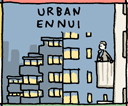
It's true that Murakami's books circle around a small number of common tropes -- classical and jazz music, holes in the ground, cats, faceless and nameless enemies, a deep sense of urban ennui (see Grant Snider's Haruki Murakami Bingo for a better list) -- but he shares that with plenty of other writers. (I could name J.G. Ballard, for one.) There's nothing wrong with having a style, and Murakami certainly has that: his writing keeps its essential Murakami flavor even through translation, first, in his earlier novels, by Alfred Birnbaum, and more recently by Jay Rubin and Philip Gabriel. In fact, the three books of 1Q84 were split by Rubin and Gabriel, though the result is seamless.

1Q84 is Murakami's longest novel to date, but it's not his deepest -- I'd still call Hard-Boiled Wonderland and the End of the World his most enigmatic, least fathomable novel and his best, most characteristic books are Kafka on the Shore, A Wild Sheep Chase, and The Wind-Up Bird Chronicle. 1Q84, instead, gives Murakami length -- the opportunity to stretch one of his typical plots out further than usual, to space out his sparse external events and vastly increase the number and importance of his dialogues and monologues about life.

So 1Q84 is a 900-plus page novel with a slim love story at its core -- boy meets girl, boy loses girl, boy finds girl (not necessarily in that order, or in the same world) -- and a sideslip alternate-world premise. It's a novel entirely for people who already like Haruki Murakami novels -- actually, I may go back on what I just said, and declare this to be the ultimate Murakami novel for that reason. If you haven't read any other Murakami novel, don't start here. In fact, if there's any other Murakami novel you haven't read, read that one first. But this one's worth getting to, once you do.

Paul Hornschemeier, Life with Mr. Dangerous

Hornschemeier has one of the hardest-to-spell names in modern comics -- or older comics, or even general literature, come to think of it. Luckily, he's good enough at what he does to make the effort of spelling his name correctly worth it. (I read his book Mother, Come Home a few years back and have been looking for more of his stuff since.)

And I have to admit that I don't recall the details of Life With Mr. Dangerous in great detail. I think this is a more directly fictional, distaff version of Jason Shiga's Empire State -- the story of a young, emotionally closed-off person who is shocked into contemplating a new life when the closest thing to a significant other he/she has takes off for greener pastures on the other side of the country. 

(Flipping through the book, that's reductionist and not more than slightly accurate, but I'll leave it there: this is another one of those figuring-out-your-life stories about twenty-somethings, told with insight and a keen eye, and that's close enough to give you the idea without giving away anything important.)

Hornschemeier is one of the quietly excellent writer-artists in comics today; his books are touching and real and grounded, while still having that flavor of the fantastic that only comics can provide. He's often left off "best of the year" lists, and I don't know why: he's as good as anybody, and much better than most.

Julian Barnes, The Sense of an Ending

Literary novels -- based on subtleties of character and nuances of language -- are the last things one should leave six months to review. And yet here I am, one hundred and fifty-seven days later, trying to figure out what to say about Julian Barnes's Booker Prize-winning short novel The Sense of an Ending.

This is the story of a man almost old: retired, settled, quietly leading a life where nothing is expected to change until that one last irrevocable change. But then the dead past -- literally dead, as in a friend from forty years past who committed suicide then -- come back, and he has to work through what really happened then, and what it means to him now.

Like several of Barnes's previous novels, Sense of an Ending has a love triangle at its core: Tony went out with Veronica briefly back in the '60s, and then she shifted her attentions to his more brilliant friend Adrian, who soon killed himself. The book takes place almost entirely in Tony's head, first during the '60s (seen in retrospect) and then in the modern day, colored by those '60s days of youth and energy. Barnes, as a writer, has often I think been painted as not quite as brilliant as one or another of his cohort -- not as cutting as Ian McEwan, not as slashing as Martin Amis -- but it's always dangerous to read a protagonist as too close to his author. Still, it must be pleasing to prove them (whoever "them" are) wrong at his age, with a precise, measured stiletto like this.

I imagine most of the people who read my blog aren't interested in novels like this, but Sense of an Ending is short, thoroughly excellent, and a tricky, sneaky, twisty story about real people and their lives over the last forty years. If you only hit a literary novel once a decade or so, you could do far worse than to make this one your choice this time out.

Hornswoggler Says "Check It Out"

Haruki Murakami Bingo, from the inimitable Incidental Comics. This is only one square -- clickthrough for the entire thing.